BOXING
The jill says no
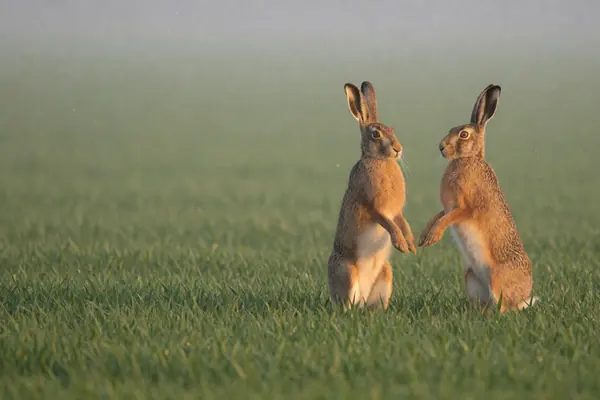
The People's Trust for Endangered Species says boxing hares are females fending off amorous males, standing upright and striking out with their front paws.
Why March? doodlemad
WILDLIFE IN PLAIN ENGLISH
Two hares rear up in a spring field and trade blows.
Hare or rabbit?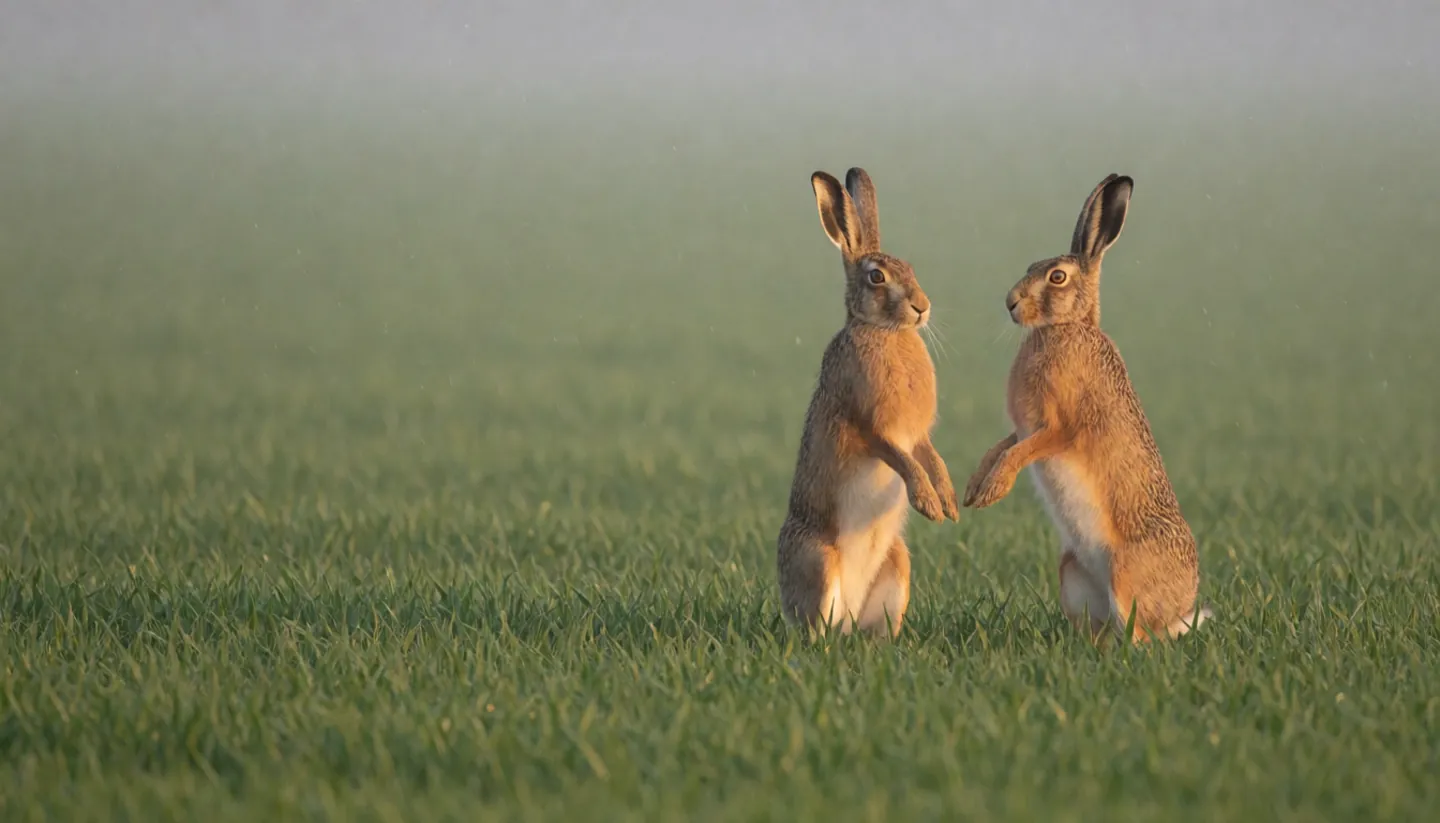
BOXINGseason: spring
It looks like madness, and it gave us the phrase 'mad as a March hare'. Conservation charities explain it as courtship: most boxing is a female telling an over-keen male to back off.
Updated
THE SHORT ANSWER
Brown hares are solitary most of the year.
Spring brings them together, briefly and noisily.
BOXING
The People's Trust for Endangered Species says boxing hares are females fending off amorous males, standing upright and striking out with their front paws.
Why March?LEVERETS
Unlike rabbit kits, leverets are born furred, with open eyes, above ground. Their mother keeps them in separate forms and visits each about once a day after dusk.
Spot the differenceSPEED
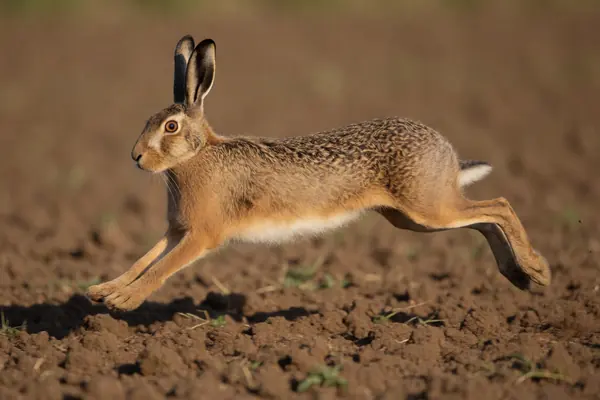
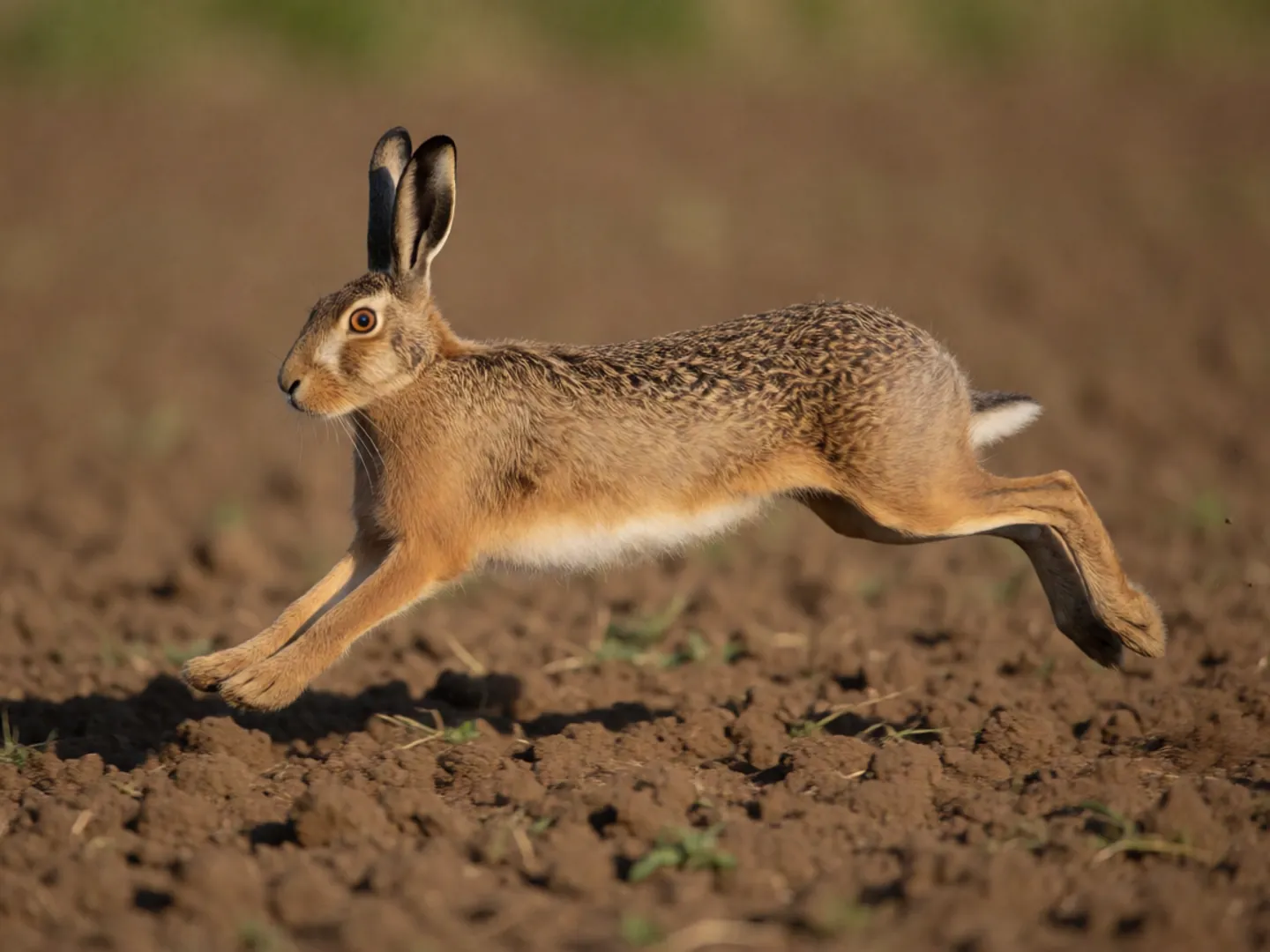
Hares have no burrow to run to. Speed is their main defence, and as they run they tuck the tail down, hiding its white underside.
See the numbersHARE OR RABBIT?
Pick a clue to see what it tells you. The bar shows how strongly that clue points to a brown hare rather than a rabbit.
Identification points from the People's Trust for Endangered Species and the Wildfowl & Wetlands Trust.
TWO NUMBERS WORTH KNOWING
One figure on how fast a hare can go,
one on how many live in Great Britain.
72 km/h
Running speed when escaping predators
PTES says brown hares can run at up to 72 km per hour. WWT gives 45 mph and notes how quickly and often they change direction.
TOP SPEED · PTES
579,000
Estimated brown hares in Great Britain
PTES cites a GB population of 579,000 and says the Breeding Bird Survey, which also records mammals, showed a 27% rise in the rural population between 1995 and 2022.
POPULATION · PTES
Brown hares are most abundant in lowland cereal-growing counties, particularly East Anglia, and rare in south-west England, according to PTES. Their main predator is the fox.
FOUR TIPS FOR HARE WATCHING
These follow what the wildlife charities say about hare habits and habitat.
The wildlife crime unit's guide calls these the most interesting months, when courtship and boxing begin.
Hares favour arable fields, grassland with long grass and hedgerows, and open fen and wetland reserves.
Hares are mostly active at night and generally forage at dusk and dawn.
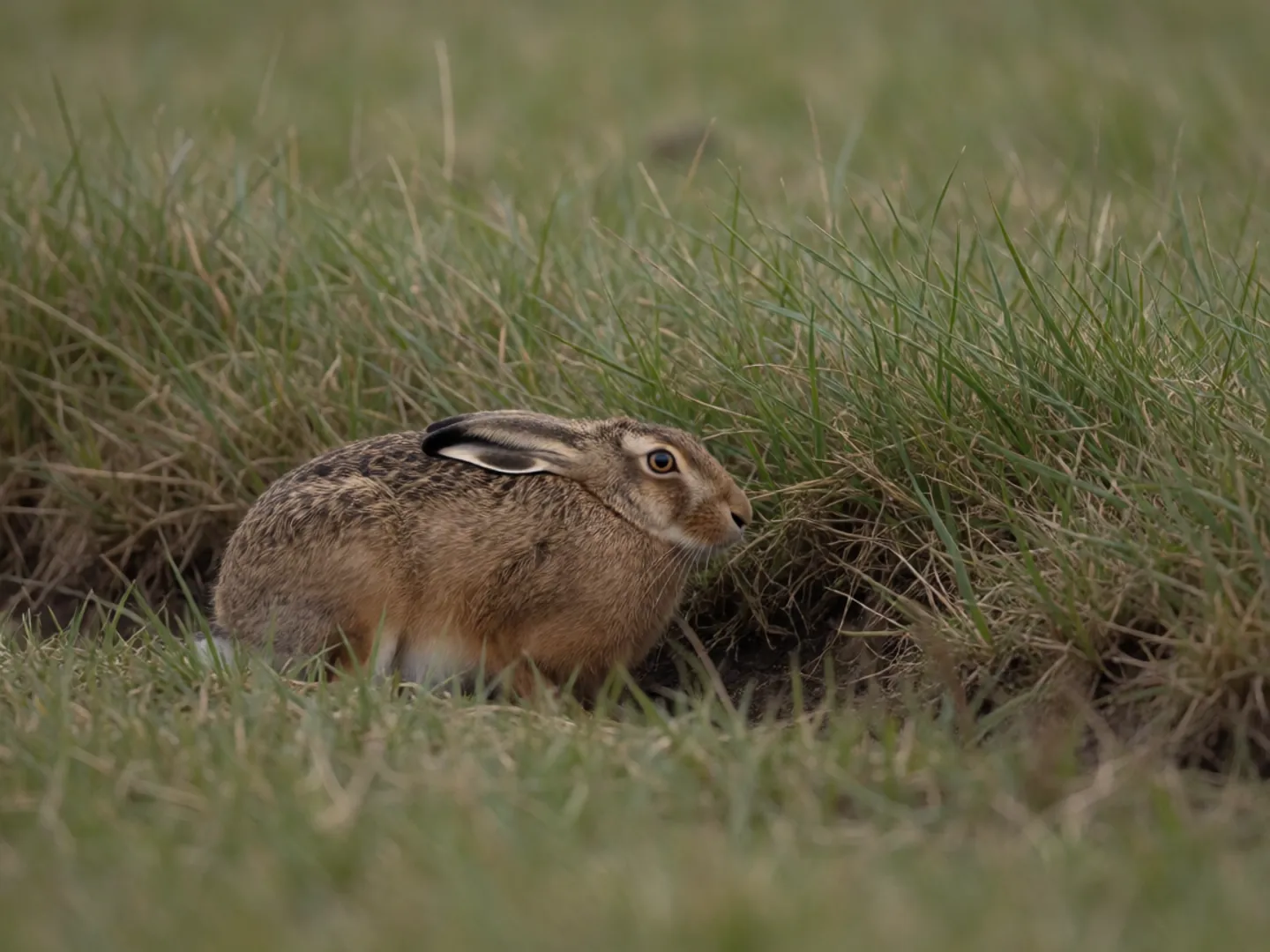
By day a hare often lies flat in its form, a shallow dip in the grass, and is easy to miss.
WHY 'MAD AS A MARCH HARE'
Brown hares are mainly solitary, but they gather in small groups in late winter and during courtship, which often involves several males chasing a female. The leaping, chasing and boxing look wild beside their usual quiet habits.
PTES points out that boxing happens throughout the breeding season, which runs from February to September, not only in March. Females can have up to four litters a year, and the young are weaned after 3 to 4 weeks.
Questions
Most boxing is a female (jill) fending off a male (jack) that is pressing his attentions during courtship. She stands upright and strikes out with her front paws. Some bouts are between competing males.
No. PTES says it happens throughout the breeding season, over several months, although March and April are the classic time to see it.
Leverets are normally left alone in their forms. WWT says the mother visits each one in turn about once every 24 hours, shortly after dusk, to feed and clean it.
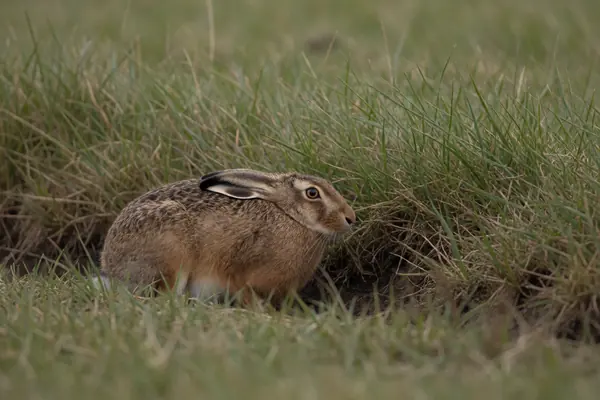
Hares are much bigger, with very long black-tipped ears, live above ground rather than in burrows, and run with the tail tucked down. Rabbits flash a white tail as they run.
PTES says they are thought to have originated in central Asia and were probably introduced to Britain in Roman times. WWT notes that the mountain hare is the UK's only native hare.
ABOUT THIS NAME
doodlemad.com is part of the DoodleSale portfolio. It isn't in an auction right now, but you can ask about leasing it.